A note · on advisor change
What Clients Feel but Don't Say During Advisor Transitions
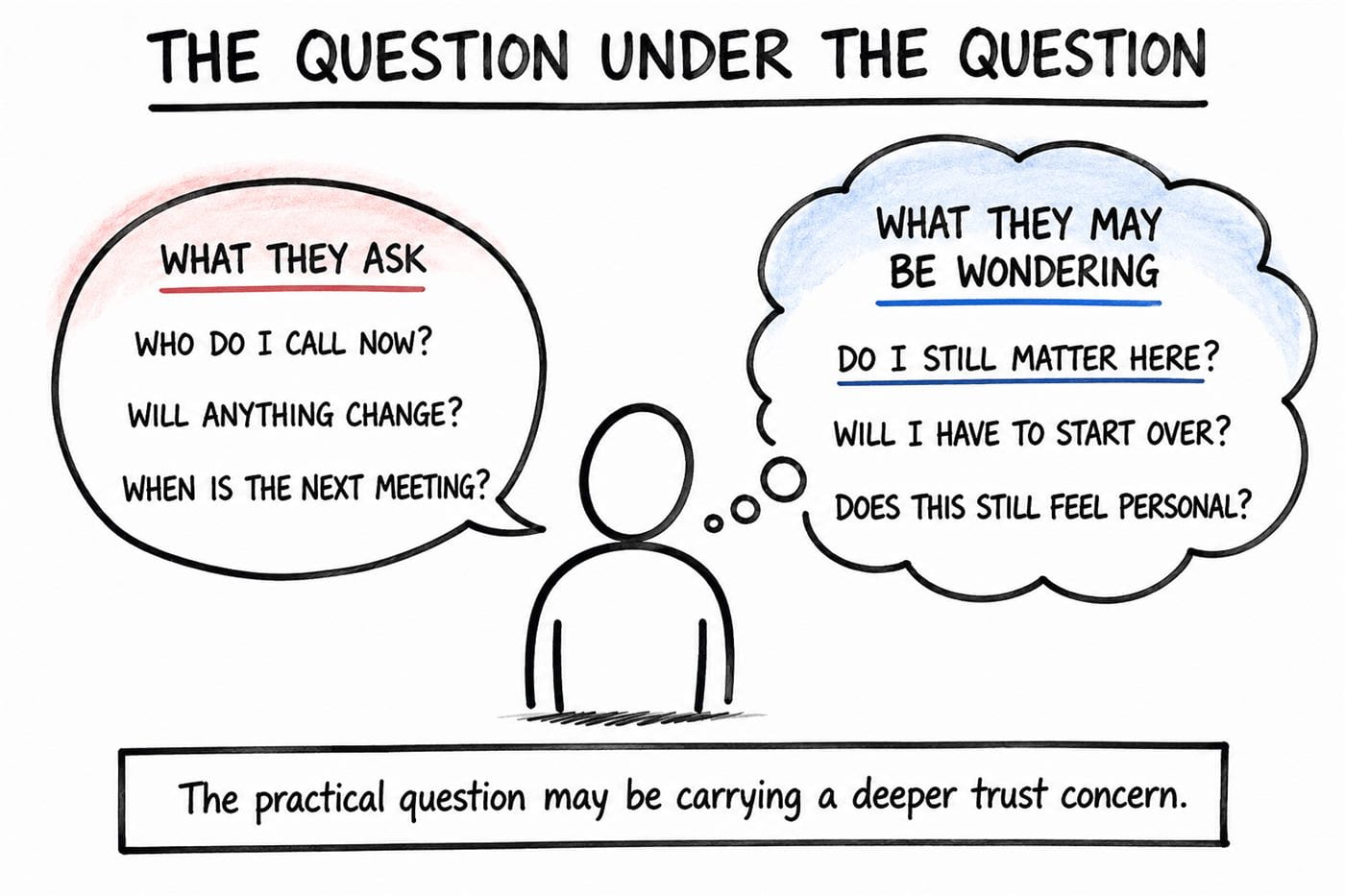
Advisor change can happen in many ways.
An advisor retires.
A firm completes an acquisition.
A client relationship is reassigned.
A senior advisor begins handing clients to the next generation.
A familiar service team changes.
On paper, the transition may look organized.
The email goes out.
The new advisor is introduced.
The account details are transferred.
The next meeting is scheduled.
But the client may be carrying questions they never say out loud.
They may never say:
“I feel less important now.”
But they may be wondering it.
That is one of the hardest parts of advisor change.
Most clients will not announce the emotional layer.
They may not say:
“I’m worried I’ll have to start over.”
“I’m not sure this new advisor understands us.”
“I don’t know if my spouse feels comfortable.”
“I’m wondering whether this relationship still feels personal.”
Instead, they ask practical questions.
Who should I call now?
Will anything change with my account?
When is the next meeting?
Who else is on the team?
Those questions matter.
But sometimes the practical question is carrying a deeper concern.
The client is not only asking how the process works.
They are asking whether the relationship still feels safe.
That is why advisor change requires more than a polished transition email.
It requires advisors and firms to notice what the client may not know how to say yet.
Not by over-talking.
Not by turning the meeting into therapy.
But by slowing down enough to hear the question underneath the question.
Because the first signal of risk may not be a complaint.
It may be hesitation.
A delayed response.
A quieter spouse.
A shorter meeting.
A lack of follow-through.
A client who says “everything is fine” while quietly reassessing the relationship.
Documentation may transfer quickly.
Trust often needs to be re-earned in small, visible moments.
That is the real work of advisor transitions.
If your firm is navigating advisor retirement, succession, acquisitions, or client reassignment, I’d love to have a conversation about how you’re helping clients still feel known through the change.